


Interest Rate Predictions for 2026: What Property Managers and Buyers Need to Know

Picture of PropertySage

PropertySage

TRUSTED PROPERTY MANAGEMENT

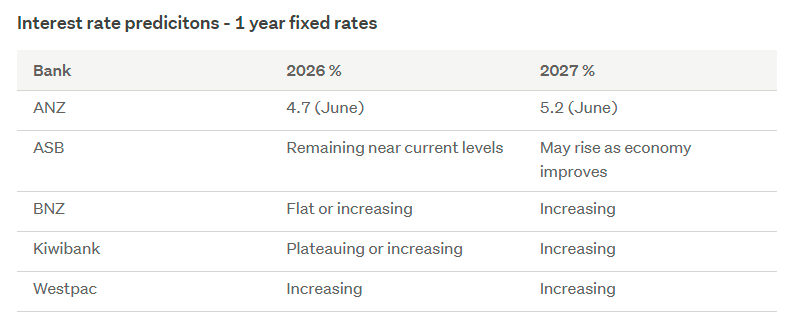
Interest rates in New Zealand are expected to remain steady or increase modestly throughout 2026, with major banks forecasting one-year fixed mortgage rates around 4.7% to rising slightly by 2027. The Reserve Bank’s official cash rate is predicted to either hold steady or rise gradually, influencing these lending rates. Experts recommend considering mortgage term fixes carefully, with options ranging from one-year to three-year terms depending on personal circumstances and market outlook

Share Post:

As 2026 unfolds, understanding interest rate trends is crucial for property managers and home buyers planning their next financial steps. According to Trade Me Property’s latest analysis, the outlook from major New Zealand banks suggests rates will mostly plateau or rise modestly during the year.

  • Bank Predictions:

Major banks like ANZ, Westpac, ASB, BNZ, and Kiwibank expect one-year fixed mortgage rates to either remain near current levels or gradually increase through 2026. ANZ forecasts the rate at about 4.7% midyear, with a slight rise in 2027. Some lenders see potential rate increases as the economy strengthens .
  • Official Cash Rate (OCR) Outlook:

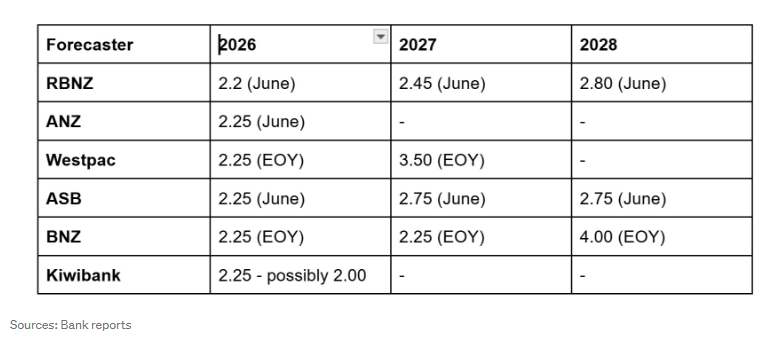
The Reserve Bank’s official cash rate, which heavily influences retail lending rates, is widely expected to maintain a steady or gently rising trend during 2026, providing a foundation for mortgage rate projections .
  • Expert Advice on Fixing Mortgage Rates:

Mortgage experts offer varied views on how long borrowers should fix their rates. Some recommend one-year fixes as a flexible option, while others suggest splitting terms or opting for longer fixes depending on personal circumstances and market views. Carefully weighing break-even points is advised before committing .

  • The Reserve Bank’s Role:

The Reserve Bank remains a key player, adjusting policy rates to balance inflation and economic growth. Its decisions will continue shaping the direction of mortgage interest rates throughout 2026 .

  • Key Takeaway:

Given the nuances and uncertainties in economic forecasts, seeking expert financial advice tailored to individual situations is important before making mortgage decisions. Staying informed about market movements helps property managers guide clients and plan investments wisely .

This summary aims to equip property professionals and home buyers with up-to-date insights to navigate the evolving interest rate landscape confidently in 2026.

Source from trademe: https://www.trademe.co.nz/c/property/article/Interest-rate-predictions
The opinions and research contained in this article are provided for information purposes only, are intended to be general in nature, and do not take into account your financial situation or goals.


Stay Connected

More News & Blog

Auckland Market Update: What Local Landlords Need to Know About the Winter Property Softening

The New Zealand housing market is navigating a period of mid-year adjustment. ANZ’s latest Property Focus report explicitly highlights that Auckland is currently underperforming the national average, making it a critical time for local investors to assess their portfolios.
As your Auckland property management partner, we are closely tracking these updates. Here is a quick breakdown of what is happening across our region right now, why investors are hitting the pause button, and what it means for your local assets.

Easing Inflation Fears: Why a July Rate Hike Changes the Game for Property Borrowers

Independent economist Tony Alexander warns that an upcoming Official Cash Rate (OCR) hike is likely. While recent data shows consumer and buyer sentiment is becoming less negative, this rising economic resilience actually increases inflation risks. Consequently, borrowers face higher long-term interest rates as the Reserve Bank aims to cool down the economy

Tony Alexander: What the OCR Hold and Reserve Bank Warning Mean for Mortgage Rates

The Reserve Bank held the Official Cash Rate at 2.25% but warned that rate increases are likely to begin as early as September. Global uncertainties, especially oil-supply shocks tied to the Iran conflict, have made growth and inflation forecasts more volatile and the future path of interest rates less predictable. Given this uncertainty, medium- to long-term fixed mortgage terms (for example, three years or longer) offer better protection than repeatedly rolling short-term fixes.